| |
| This Won’t Hurt a Bit! Medicine in art throughout the ages. |
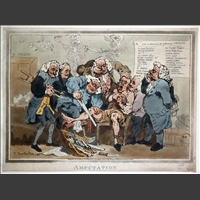 |
For more than 5000 years artists have been attempting to depict illness and healing in their art. From Egyptian wall paintings, medieval manuscripts, Renaissance masterpieces, and 19th and 20th century realism, the mysteries of medicine have inspired artworks around the world. In this lecture we will look at some of the bizarre, amusing and often startlingly realistic depictions of medicine in art throughout the ages. |
|
| Fiction, Fallacy & Fake News - Spin and propaganda in art throughout
the ages
|
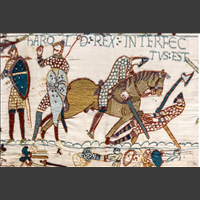 |
Fake News has been around since the time of the Egyptian pharaohs and art has always been one of its favourite media. In this talk I will be uncovering the subtle art of spin and propaganda from the glories of Ancient Mesopotamia to the Norman Conquest and then on to Elizabethan England and the dark days of Nazi Germany. Every picture tells a story - whether it is true or not is an entirely different matter. |
|
| From Garbo to Garland – The magical art of Hollywood |
 |
Lights, Camera, Action! – inside stories of the art and artifice of the early decades of Hollywood. This lecture covers the work of stills photographers, costumiers, publicists, actors and actresses and the movie moguls who made it all happen. |
|
| From Magic Lanterns to Metro Goldwyn Mayer: The birth of the Silver Screen and the art that surrounded it |
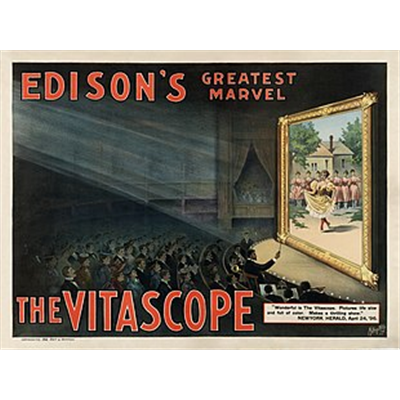 |
The moving image has been a powerful source for imagination from the first moment a magic lantern flickered into life in the 17th century. In this lecture we will be looking at how the Motion Pictures industry first developed throughout the late 19th and early 20th centuries and how it was inspired by and inspired in turn some of the greatest artists of the early 20th century. Metropolitan Print Company; Copyright 1896 by Raff & Gammon |
|
| Shock! Horror! Probe!
The art and artifice of ‘Fleet Street’:
A newspaper story in pictures
|
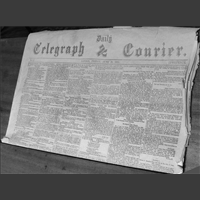 |
Since the end of the 15th century, when Wynkyn de Worde set up England's first printing press and after 1702, when the first newspaper, the Daily Courant, moved in, the term "Fleet Street" has been synonymous with newspaper journalism. In this lecture we will be looking at the ups and downs of this notorious ‘Street of Shame’ via the art that illustrated its stories. |
|
| Arsenic and Old Wallpaper – the darker side of William Morris |
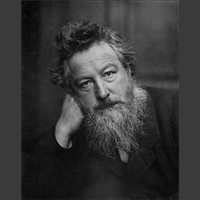 |
Victorian designer William Morris was indeed a man of many faces. He is probably best known today as the creator of wallpaper, fabrics and stained glass windows, but he was also a poet, artist, philosopher, typographer and socialist. What is less well known about him is his involvement in one of the greatest health scandals of 19th century and his links to the richest copper and arsenic mine in Europe. |
|
| Harems. Hookahs, Odalisques and Ottomans:
A Passion for the Oriental in 18th & 19th Century Art
|
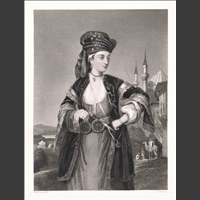 |
The exotic lure of the Orient has inspired European artists for centuries. In this lecture we will be taking an artistic journey across the Near and Middle East to see how Western artists brought the mysteries of ‘The Other’ to the fashionable salons of Europe throughout the 18th and 19th centuries.
|
|
| Mad, Bad & Fascinating to Know – The colourful ancestors of the Dukes of Bedford |
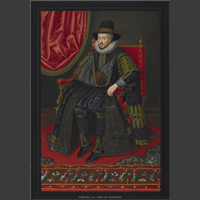 |
Wine merchants, poisoners, mine owners and creators of afternoon tea - the colourful history of one of England’s oldest aristocratic families and the fascinating art that surrounds them. The story of the Russell family from the 15th to the 20th century.
Image from British Museum |
|
| Cave Paintings and Prehistoric Carvings: Can we really call them art? |
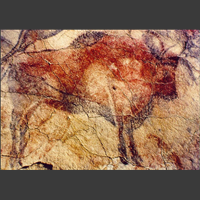 |
It was once thought that art did not exist in any form until around 30,000 BC when the Cro-Magnons took over from the Neanderthals in the Palaeolithic period. However a carved and painted figurine found in Morocco in 1999 is now said to be at least 400,000 years old. Throughout this lecture we will look at some of the very earliest examples of art from across the pre-historic world. From carvings to cave paintings, the innate skills of our ‘uncivilised’ ancestors will amaze you.
This lecture can be extended as a Study Day |
|
| Faces from the Grave– The Beautiful and Mysterious Mummy Portraits of Roman Egypt
|
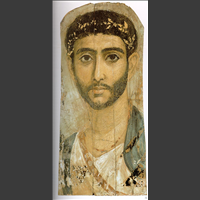 |
Look into the extraordinary eyes of these funerary portraits from Roman Egypt and you will find yourself absorbed by the personality of a real person, alive just decades after the death of Christ. From the 1st to the 3rd century AD the Roman colonies of Egypt combined their love for portraiture with the Egyptian habit of mummification. When the wealthy citizens of Fayuum died they had their very best painted portrait wrapped inside the bandages of their mummies. The Mummy portraits represent the largest body of ancient easel-painting to have survived from the Late Roman period. They also provide us with a unique record of the fashion, hairstyles and jewellery from this important period of Roman history.
|
|
| The History and Art of the Catacombs of Rome |
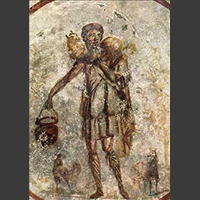 |
This lecture covers the origins of the Catacombs of Rome and the extraordinary varied art that adorns them. We will put to rest the myth that persecuted Christians hid inside its tunnels and look instead at the more unusual habits practised underground, such as the tradition of dining with the dead. Some of the oldest symbols of Christianity can be found within in the catacombs. From the iconic fish to the mysterious praying female figures, each one exquisitely executed in frescoes and sarcophagi carvings.
This lecture can be extended as a Study Day |
|
| Gods and Goddesses - Saints and Sinners
The revival of mythological art from the 15th to the 19th Century |
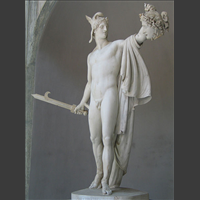 |
The great revival of ancient Greek and Roman myths that took place during the Renaissance gave birth to some of the most exuberant art of the time and continued to inspire artists for another five centuries. In this lecture we will look at some of the mythological characters whose misdemeanours were captured in art and the Christian saints and sinners who went on to steal their identities. [Perseus with Medusa's head - sculpture by [Antonio Canova] . Museo Pio-Clementino, Roma. Taken from en.wiki.
This lecture can be extended as a Study Day |
|
| What exactly is Byzantine Art and how do you pronounce it? |
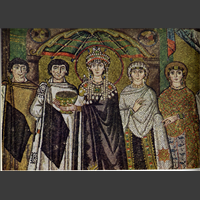 |
“You say By-zantine and I say Byz-antine” as the song almost goes! In fact there is no right way to pronounce it, but it is certainly a subject worth studying. The Byzantine Empire flourished for over a millennium as the successor to the Roman Empire in the eastern Mediterranean. In this lecture we will look at its origins and see how Byzantine artists created some of the most sublime images in the history of Christian art.
This lecture can be extended as a Study Day |
|
| The Emperor and the Prostitute. Justinian and Theodora, the most notorious couple in the history of Byzantium and the art they inspired. |
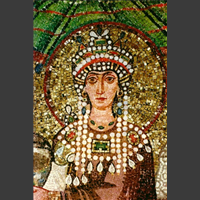 |
| Justinian and Theodora bowed to no man when they ruled the world’s most powerful empire during the 6th century. A former prostitute and exotic dancer, Theodora was a woman with an unsavoury past, while her husband’s roots lay in Balkan peasant stock and yet together inspired some of most beautiful art in the Byzantine Empire. From the sublime mosaics of Ravenna and St Catherine’s monastery to the miraculous architecture of Hagia Sophia - who could forget the most outrageous imperial couple in Byzantine history?
|
|
| The Art of the Magical Cave Churches of Cappadocia in Turkey |
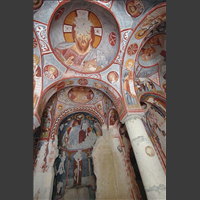 |
| The lunar landscape of this extraordinary region situated in the heartland of Anatolia boasts some wonderful example of early Byzantine art. An important centre for Christianity in the 11th to 13th centuries, the churches and monasteries were cut directly into the volcanic rock. However the simple almost pre-historic exteriors give no indication of the extraordinary art that lies within. Some of the most talented artists from Constantinople were commissioned to decorate the interiors of the Cappadocian Churches, leaving us with some of the finest surviving examples of medieval Byzantine fresco.
|
|
| The Origins of the Icon – Painted wooden panels or Eastern Windows to Heaven?
|
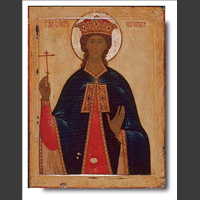 |
Throughout history no type of religious art has provoked such extreme emotions as Icons. Why were people prepared to fight and die for them, whereas others were just as determined to destroy them? These are some of the questions we will be considering during this lecture as we look more closely at the origins of this most mysterious Window to Heaven. We will be looking at how Icons first developed as an art form and their destruction during the period of iconoclasm. How an icon is painted and the different materials and techniques used. Different styles of icons and how they are displayed and worshipped, and how to read an icon by recognising the people and interpreting the symbols.
This lecture can be extended as a Study Day |
|
| Mary Mary Quite Contrary: Images of the Virgin Mary in art |
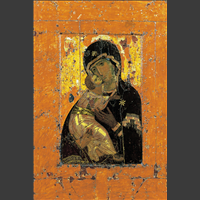 |
| The Virgin Mary is one of the most recognisable female figures in the world of art, yet this image we know so well has evolved entirely from the imaginations of fifteen centuries of Christian artists. No visual or written evidence exists that can tell us how the Mother of Jesus may have looked and many people believe the early Christian artists used the familiar images of pagan goddesses as their inspiration.
In this lecture we will look at how her image has evolved from its early beginnings in the Roman catacombs, through to the miraculous images of the 21st century.
This lecture can be extended as a Study Day. |
|
| Angels, Saints & Virgins – the Extraordinary Art of the
Hispanic Andes |
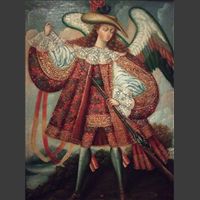 |
| Angels with muskets slung over their shoulders, Virgin Maries shaped like mountains, Saints of all shapes and sizes. When the Spanish tried to Christianise the peoples of the South American Andes 500 years ago and teach them how to paint, little did they know that natives peoples would learn their skills but make the religious art distinctly their own.
|
|
| The Stained Glass Windows of William Morris and his Circle |
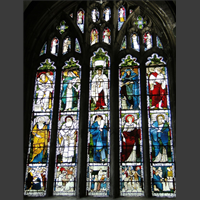 |
| At the height of the great Gothic revival in church architecture during the 19th century stained glass windows enjoyed a renaissance. Already famous for their innovative designs, William Morris, Edward Burne Jones, Dante Gabriel Rossetti and Ford Madox-Brown were responsible for some of the most beautiful stained glass windows of the 19th and 20th centuries. This lecture will look at the history of how ‘The Firm’ brought church windows to life with their new vibrant colours and sensuous designs. The languid faces of the saints and holy family often modelled on real life portraits of their friends and lovers.
|
|
| The Adoration of the Magi: From Catacomb to Christmas card, who were the Wise Men of Christian art? |
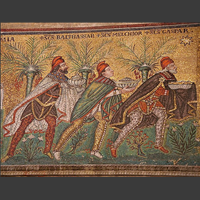 |
| They’ve adorned our Christmas cards; taken pride of place in our cribs and school nativity plays and provided centuries of artists a chance to add a dash of exotic colour into their mellow scenes of the birth of Christ. In this lecture we will be looking at the oldest images of the Magi from as early as the 3rd century; the legend that links them with the first Christian artist and their metamorphosis into the exotic kings in the Middle Ages.
(Christmas Lecture)
|
|
| Mary Magdalene: A Character Assassination in Art. |
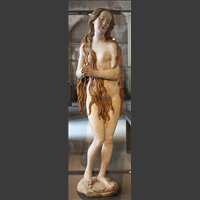 |
| Over the last few years Mary Magdalene’s reputation has been undergoing something of a spring clean and not before time. For the past 1500 years she has been the most maligned woman in the history of the Christian Church. In the sixth century she was mislabeled by Pope Gregory the Great as a reformed prostitute. This unjustified disreputable past has provided centuries of artists with the inspiration they needed to create some of the most sensuous religious paintings in history. Truly one of the most beautiful character assassinations in the history of art.
|
|
| The History and Art of the Nativity Crib |
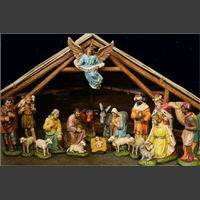 |
Nativity scenes or cribs as we know them today found their roots in the 1300’s. They started as display pieces for Italian churches. Often made out of terracotta, these early Nativity sets were displayed year round. Since then they have evolved into a wonderfully diverse variety of artistic scenes. In this lecture we will be looking at the art form of the crib from the carved masterpieces of the medieval era to the extraordinary semi-pagan variations of South America. Christmas will never be the same again! |
|
| Snakes, Saints and Pawnbrokers - The Truth About Christmas |
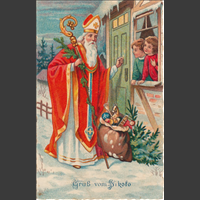 |
Why do we bring a tree into out homes at Christmas? How did Santa become the patron saint of pawnbrokers and what has a snake got to do with it all? The truth about some of out Christmas traditions may surprise you. |
|